Sustainable Practice for Therapists and Clinicians
You love your work.
You just can't keep doing it like this.
A group program for therapists and clinicians who want to do meaningful clinical work without losing themselves in it.
Flourish addresses what clinical work makes difficult to sustain.
Not as coping. As a professional competency — essential for sustainable practice.
This isn’t about doing more. It’s about working differently with what the work already asks of you.
Flourish is a structured six-month professional development program, grounded in established supervision, trauma-informed, and relational practice frameworks.
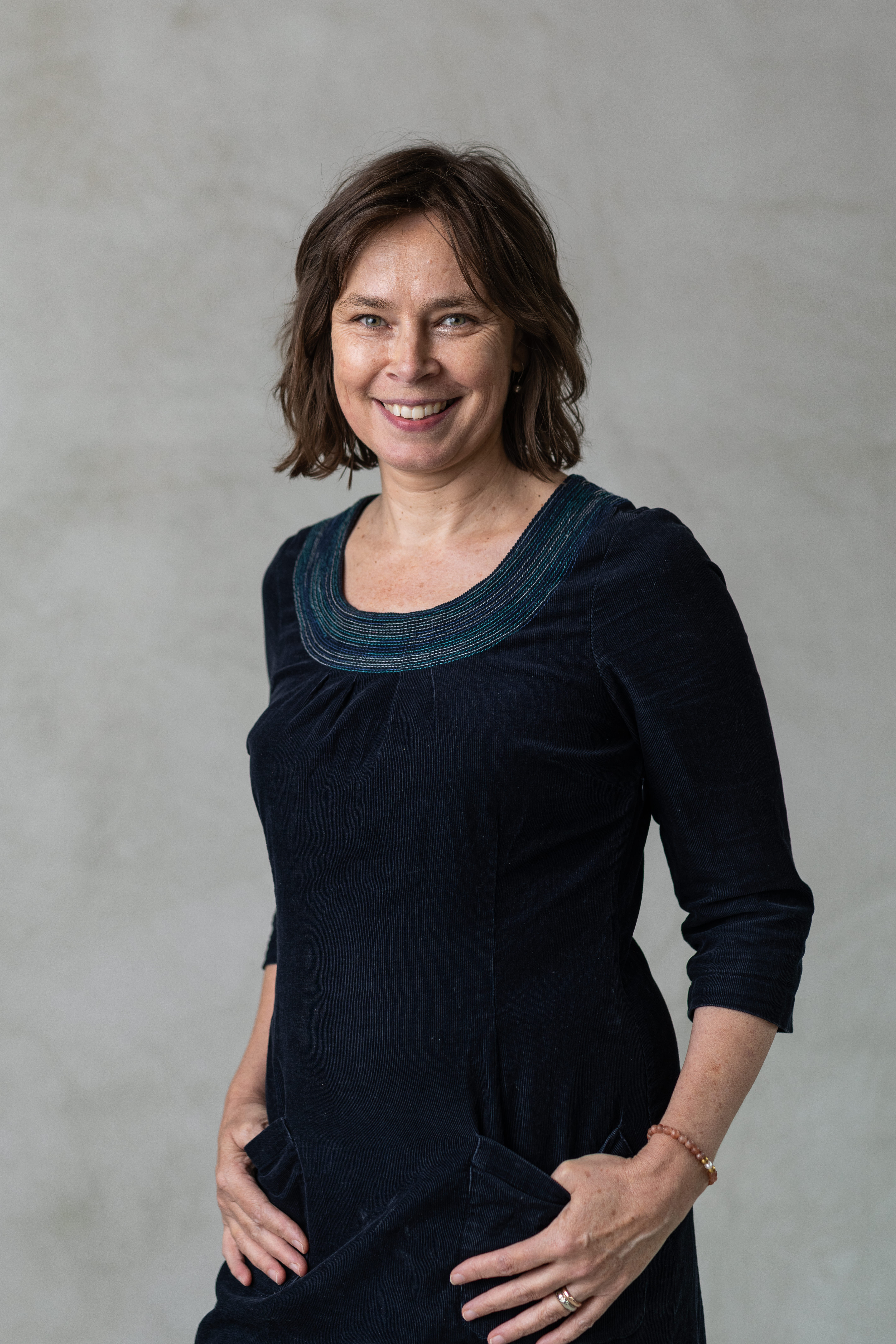
Facilitated by Minky van der Walt,
RMT · PACFA Clinical Member
A small, closed group program for clinicians
Starts September
I've spent 25 years in this work. I know what it can cost.
Maybe it sounds like this.
"I just want to sleep through the night."
"I've got nothing left to give."
"I want to be present for my family, not just my clients."
Or maybe it's quieter than that.
A creeping sense that the work that once felt meaningful now just feels heavy. The self-doubt that won't quite settle. The inability to switch off after a hard session.
If you recognise any of this, you are not alone
And you are not failing.

If this feels familiar, it's not a sign you're doing the work wrong.
Nor simply a matter of resilience.
It's a sign of the kind of work you're doing.
WHERE THE IMPACT ACCUMULATES
Clinical training prepares you to do the work.
What is not always addressed is how to work with the ongoing impact of that work in practice.
Most clinicians are taught to hold the work.
Very few are taught how to work with its impact, so it can be metabolised rather than carried.
The work leaves its mark in three distinct ways
01
IN THE BODY
Sustained empathic presence has a physiological cost - often felt as activation, tension, or depletion that rest alone does not resolve.
02
IN THE MIND
Thoughts that don't settle - rumination, self-doubt, or clinical loops that continue long after the session ends. Occupational patterns, not personal failure.
03
IN MEANING
A shift in how the work feels - moral distress, loss of clarity, or a gradual erosion of why you entered the work. Not signs of burnout, but signals that require more than individual reflection.
Many forms of professional support address one of these.
Very few support you to work with all three, in practice, over time.
Flourish is designed to integrate all three.
INTRODUCING
Flourish
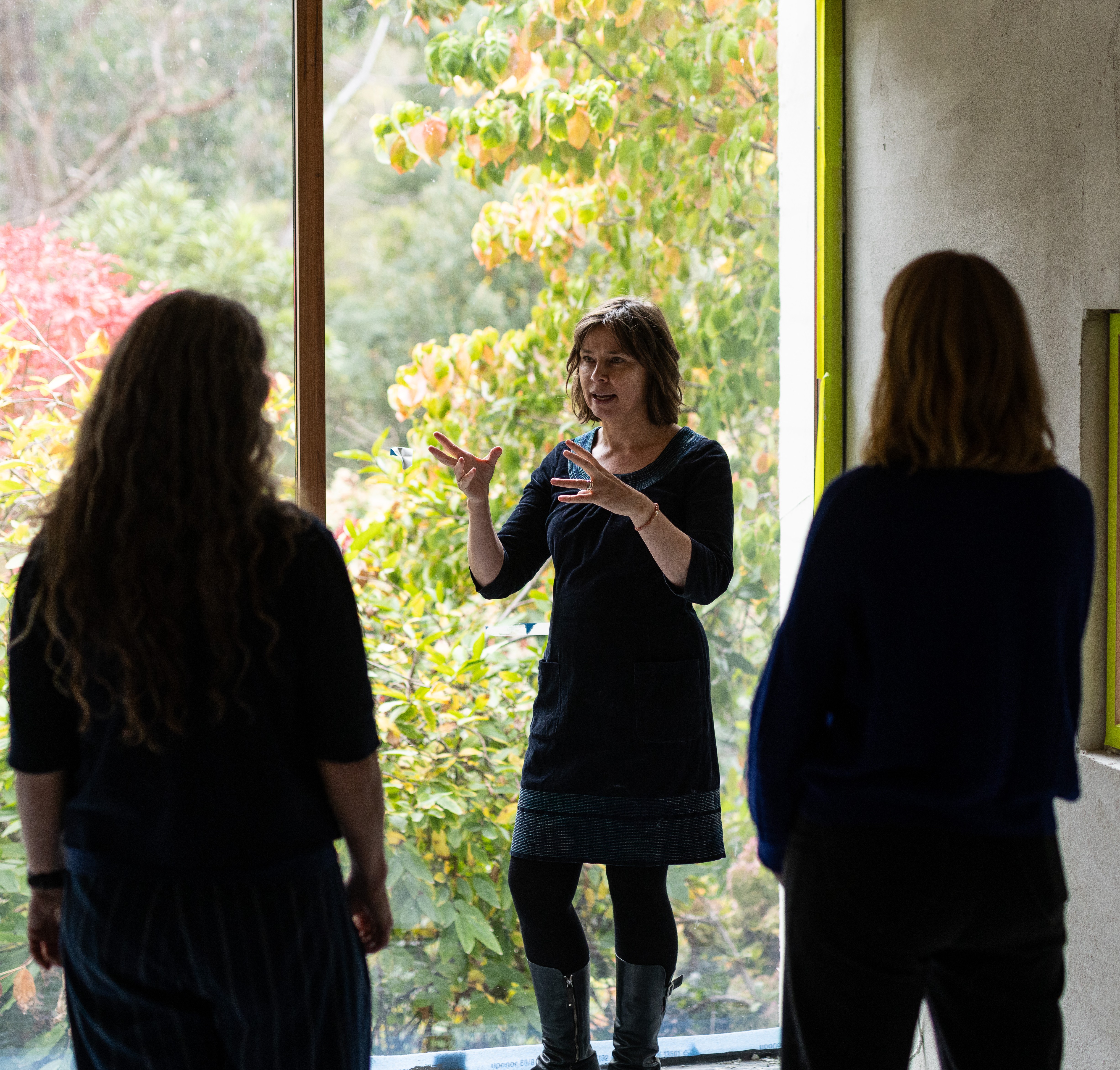
Flourish is a structured, six-month professional development program that supports clinicians to understand and work consciously with what happens inside them during the work - not as a self-care strategy, but as a core professional capacity.
Through neuroscience-informed teaching, facilitated group reflection, and creative and embodied process, Flourish is designed to develop six professional capacities.
They aim to support clinicians to work more consciously with the impact of their practice over time - across their practice, their clients, and themselves.
The work requires going beyond intellectualisation alone. It needs to be experienced, practised, and reflected on over time.
WHY THE GROUP MATTERS
A small, closed group. Six months together.
Some aspects of clinical work cannot be processed alone. They require shared reflection, collective meaning-making, and the specific solidarity of people who understand the realities of the work from the inside.
FROM PAST PARTICIPANTS
What clinicians say
Minky was able to clearly articulate the systemic challenges we face and put words to what I was experiencing. I now see that the impact of the work on me is an expected professional reality, not a personal failing — and that structuring counterbalances into my practice is part of doing the work well.
TORI — PAEDIATRICIAN
May be recognised for Continuing Medical Education (CME), depending on your professional body or organisation.
WHAT YOU WILL DEVELOP through this program
Six professional capabilities
Core practitioner skills designed to support clinical judgement, presence, and sustainable practice.
1. Use your own responses as clinical information
2. Stay present without over-absorbing
3. Track the impact of the work before it builds up
4. Work effectively in reflective group spaces
5. Process what talking alone doesn’t shift
6. Build a way of practising that actually lasts
THE METHODOLOGY
What creative and embodied process makes possible
Clinical work leaves its mark in the body before it surfaces in language.
Heart pounding after a hard session.
The weight that doesn't shift after a good night's sleep.
The instinct in a room that you can feel but can't quite put your finger on.
These experiences live below reflection, analysis, and explanation - in the body, in felt sense, and in the subcortical realms that manage stress responses, memories, and emotional experience.
And those realms don't respond to insight the way they respond to rhythm, images, colour, movement, and sound.
Flourish is designed to work with that - structured, facilitated, and grounded in 25 years of clinical practice.

Understanding this is not the same as being able to do it.
Most clinicians already have insight.
What is often missing is a structure that allows that insight to be used, consistently, in practice.
THE PROGRAM
Six months. A developmental arc.
A developmental process that unfolds through experience, reflection, and group work over time.
Each stage builds on the last, supporting a shift in how you relate to the impact of clinical practice, not just how you understand it.
01
NOTICE
Noticing the impact of the work, internal and external factors
ATTUNE
Understanding your own body and nervous system in the work
03
TEND
Working with empathy, compassion, & professional limits
INTEGRATE
Working with the costs and the gifts of the work
BUILD
Building sustainable practice self leadership & collective care priniciples
SUSTAIN
Integrating and consolidating ytour own sustainable pathway forwards
Since completing the program, I have found I can anchor myself in moments of significant clinical stress in a way I couldn't before. I feel more grounded ... and more able to bring that stability into sessions. I highly recommend it.
PIP — THERAPIST & EDUCATIONAL CONSULTANT
THE GROUP
How the group works.
A consistent, contained group, meeting over time, offers something that individual reflection and one-off peer support cannot.
Each session is professionally facilitated, creating a structured space for reflective dialogue.
Monthly live facilitated sessions
Monthly pre-recorded teaching
Monthly peer connection session
Creative and somatic resources
Shared online community space
Email support
About the facilitator
Minky van der Walt
Clinical member pacfa
Accredited clinical supervisor
registered music therapist

I'm Minky van der Walt. I've spent 25 years in clinical work, across hospitals, community services, and private practice, and more than 20 of those years in clinical supervision.
In supervision and within my own teams, I kept seeing the same thing. Clinicians who were skilled, experienced, and committed to their work, and who were carrying far more than the frameworks around them acknowledged or had equipped them for. Not always in crisis; but gradually depleted, increasingly cut off from what had drawn them to the work in the first place.
I created Flourish because that gap is real and widespread.
And because it can be addressed, with the right kind of support, sustained over time.
My training as a Registered Music Therapist and creative arts and somatic practitioner sits at the centre of how I work, and they are brought into Flourish with the same clinical intention I bring to everything I do.
Investment
Flourish is a sustained developmental process, not content delivery. What is often missing from professional development is structure, continuity, and support for integrating learning into practice over time. That is what you are investing in.
A six-month structure that holds your development over time
A consistent, facilitated group
A curriculum designed for integration, not exposure
Support for working with the impact of clinical practice as it happens
Pay monthly or upfront - same program, same access, same level of support.
GST applies. This may be claimable as a business expense; please check with your accountant or financial advisor.
MONTHLY
$250
+ GST per month · 6 months
UPFRONT
$1,500
+ GST · Full program
Not sure if the timing or fit is right? A short conversation can help. Book a short conversation with Minky here.
IS FLOURISH RIGHT FOR YOU?
Who this is for
Flourish is neither therapy nor supervision. It is a structured professional development space that sits as a distinct third space for this work, focused on building your capacity to work with the impact of clinical practice.
This program suits you if
You are an experienced, relational clinician (in mental health, health, or community services)
You recognise that clinical work has an ongoing impact on you and want to develop a more skilled way of working with that impact in practice
You have a strong theoretical foundation and are looking to translate this into applied clinical capability
You want to develop your capacity to use your own responses as clinical information
You are ready for a sustained developmental process over six months
You understand that reflective group work may surface both professional and personal material, and you have (or are willing to establish) appropriate support alongside the program
You value the depth and accountability of a sustained, closed group process
This program is not for you if
You are currently a therapy client at Tempo (to maintain clear therapeutic boundaries)
You are currently experiencing significant mental health difficulties that would be better supported in a therapeutic setting (for example, through your GP or a mental health service)
You are seeking individual therapy or clinical supervision, rather than a structured professional development program
You are unable to attend the monthly live group sessions
You are looking for content-only professional development, rather than a program that includes group process and reflective practice
You are looking for short-term strategies rather than a longer-term change in how you practise
If you're in a period of significant personal difficulty and unsure whether a group process is the right container right now, a short conversation can help you work that out. There's no obligation. Just an opportunity to think it through together before committing.
Asking these questions before committing is itself a sign of the kind of practitioner this program is designed for.
COMMON QUESTIONS
Frequently asked
How is Flourish different from therapy or supervision?
Flourish is neither therapy nor supervision. It sits in a third space that neither occupies.
Even the most relational supervision is organised around the clinician's work and accountability. Therapy focuses on personal healing and individual history.
Flourish is organised around the clinician - as structured professional development, held in community. It addresses the occupational impact of relational clinical work on the practitioner: what the work leaves behind, and how to develop the professional capacity to work with that consciously over time.
The competencies Flourish develops, use of self, sustained reflexivity, recognising and responding to vicarious impact, are named as required across PACFA, AASW, APS, and allied health frameworks. They are required in principle, but rarely developed in practice in a structured or sustained way. Flourish exists to address that gap.
Why does Flourish use creative and embodied approaches?
Because so much of what we carry from this work lives below the waterline.
Above the surface (in our thinking, talking, planning) we can reflect, analyse, and explain. All of which matters. But the physiological residue of a hard session, the activation that doesn't quite settle, the image or sound that lingers after complex work - these don't live up there. They live in the body, in felt sense, in the subcortical realms that manage our stress responses, our memories, and our emotional experience.
And those realms don't respond to insight the way they respond to rhythm, image, movement, and sound.
There is also a difference between reflecting on our experience and being in genuine contact with it. Reflective practice asks us to look back. What Flourish works with goes further - into the whole of who we are as practitioners, not only what we can most easily articulate. Creative and embodied approaches make that kind of deeper contact possible. They move us from understanding our experience to actually processing it - and from there, to restoring something.
As clinicians, most of us already understand this in relation to our clients. We know that trauma doesn't resolve through explanation alone. We know that the body holds what words can't always reach. Flourish applies the same understanding to us - to what the work leaves behind in the practitioner, not only the client.
And in a group, that process deepens further. Shared rhythm, co-regulation, and creative witnessing offer something that individual reflection simply cannot replicate.
No creative background or experience is required. All processes are scaffolded. What you bring is curiosity. The rest is guided from there.
What if I miss a session, or a session needs to be rescheduled?
All live sessions are recorded, so if you can't attend a session you won't miss the content. In the unlikely event that a session needs to be rescheduled due to unforeseen circumstances, an alternative date will be arranged with as much notice as possible.
Is Flourish only for mental health clinicians?
No. Flourish is for any clinician doing sustained relational work in complex or challenging contexts - across mental health, health, and community settings.
The common ground is not a specific profession. It is the experience of doing relational work that has a cumulative impact - and the recognition that professional training has not adequately addressed what to do with it
How much time does Flourish require?
The core commitment is the 90-minute live group session each month. That is the anchor of the program and the only element that cannot be rescheduled.
Beyond that, the monthly teaching and weekly creative and somatic resources are designed to be integrated into the rhythm of your existing practice rather than added on top of it.
Some participants engage with them deeply between sessions. Others arrive at the live session having done very little, and still find the work available to them.
What Flourish asks is sustained presence over six months - not a significant weekly time investment. The depth comes from the quality of engagement, not the quantity of hours.
What actually happens in the monthly live sessions?
Each session is professionally facilitated and follows a structured arc. Sessions typically move through a brief grounding and settling practice, reflection on the month's teaching material, facilitated group reflective dialogue on clinical experience, a creative or embodied process relevant to the month's theme, and a closing consolidation.
Sessions are not lectures, peer support groups, or case discussions. They are structured reflective practice - professionally held, clinically intentional, and designed to develop the specific capacities Flourish is built around. The group is closed and consistent, which means trust deepens across the six months in a way that changes the quality of the work available in later sessions.
Who will be in the group with me?
Flourish runs as a small, closed group drawn from across mental health, health, and community contexts. The group is assembled with care - every participant has a conversation with Minky before joining to confirm fit.
What that means in practice is that you will be alongside experienced practitioners who understand the realities of relational clinical work from the inside, even if their specific context differs from yours. And because the group is closed for the full six months, what develops between participants goes significantly beyond typical professional networking
Can I claim CPD hours?
Flourish has not yet been formally registered with any professional body for CPD recognition. However, many past participants have successfully claimed hours through their own professional association — including PACFA, AASW, APS, and allied health disciplines — and some employers have approved it for Continuing Medical Education.
Whether it can be claimed depends on your specific body and circumstances. We recommend checking before enrolling, and if you have questions about your situation please ask before committing.
What if I join and it is not the right fit?
The best way to address this before it becomes a question is the conversation with Minky that happens before you enrol. That conversation exists precisely to make sure the fit is right - for you and for the group.
Given the small group size, your presence matters to the other clinicians across the six months. If your circumstances change after enrolling, please get in touch directly. We will work it out together.
When does the next group start and how many places are left?
The next group begins the week of Monday 25 May 2026. Places are limited to keep the group focused and supported, and are allocated through a conversation with Minky to confirm fit.
If you are considering joining, the right next step is to book that conversation. The group fills through individual conversations rather than open registration, and there is a finite number of places.
Is Flourish available for teams or organisations?
Yes. Flourish can be structured for clinical teams, with the program adapted to your specific context and workforce.
Clinicians who develop the competencies Flourish addresses bring measurable professional benefit to their teams and organisations - greater clinical presence, more considered responses under pressure, reduced cumulative impact, and stronger capacity to sustain quality practice over time. The downstream effects include improved staff retention, stronger clinical culture, and the kind of psychological safety that supports both clinician wellbeing and client outcomes.
If you are in a leadership, management, or workforce development role and want to explore what this could look like for your team, book a conversation with Minky directly.
READY TO BEGIN?
The capacity to sustain the work is a professional skill that can be developed
Places are limited, as groups are capped at 8..
A short conversation can be helpful if you are considering the program - both to answer your questions and to ensure the fit is right.
Flourish is facilitated by Minky van der Walt · Registered Music Therapist · Clinical Member and Accredited Clinical Supervisor (PACFA) · Practitioner in creative arts and somatic approaches · Tempo Therapy and Consulting · Terms and Conditions · Privacy Policy.
© 2026 Minky van der Walt | Tempo Therapy and Consulting | All rights reserved.